Adapt to Google's 2026 Review Rules Now
Local SEO, Google Business Profile, Service Business Marketing
Google’s 2026 Review Crackdown: What Local Service Owners Must Change Now
As Founder at Twin State Agency, I spend my time studying how local search treats service businesses, and one pattern is impossible to miss right now: Google tightened Business Profile review policies this year, and enforcement around incentivized or gated reviews is finally catching up with the local service world. If your lead flow depends on Google Maps (and it does), you cannot afford to ignore this shift.
What Changed in Google’s Business Profile Review Policies in 2026
Google has always said reviews must be authentic, unbiased, and based on real customer experiences at your business location. But in 2026, they stopped treating those rules as suggestions and started treating them like hard limits, backed by aggressive enforcement and Gemini AI moderation (support.google.com, launchcodex.com).
February 2026: Google updated its policy language to explicitly discourage incentives for reviews and to state that businesses should not pressure customers to leave reviews while still on the premises—discounts, free maintenance checks, gift cards, and “enter to win” contests in exchange for leaving or editing a review all fall on the wrong side of this line.
March 2026: Enforcement ramped up, with Google removing batches of suspicious reviews and applying more scrutiny to profiles showing manipulation patterns (dacgroup.com).
April 16–17, 2026: Gemini AI started proactively flagging fake or coordinated reviews before they go live, and Google explicitly banned staff review quotas and asking customers to mention an employee by name—both now clearly listed as violations.
Behind the scenes, Google is tracking review spikes, IP patterns, device overlaps, and text similarity. In 2025 alone, they removed or blocked over 292 million violating reviews (launchcodex.com). 2026 is the year local service businesses are really feeling that at street level.
Incentivized and Gated Reviews: Practices Now Putting Local Profiles at Risk
Many local service owners aren’t trying to “cheat.” They’re following advice they heard at a conference three years ago or copying what a competitor did. Unfortunately, several common tactics now fall squarely into Google’s prohibited bucket (Google fake engagement policy):
Incentivized reviews: “Leave us a review and get $25 off your next service,” “Free add‑on with every review,” or “We’ll fix that minor issue at no charge if you update your review.” All of this is now clearly banned, including incentives offered in exchange for revising or removing a negative review.
Review gating: Sending a happy/angry survey first and only asking the happy customers to review you on Google. Google now explicitly prohibits pre‑screening customers by sentiment before sending a review link or discouraging unhappy customers from posting.
On‑site review stations: Tablets in the office or asking staff to hand customers their phone and “leave a quick review before I go” are both high‑risk. On‑premises review setups and shared‑device asks are now explicitly against policy.
Scripted content: Training staff to say, “Please mention me—Josh—in your review,” or adding that into automated texts is now specifically called out as manipulative. The ask has to stay open‑ended and go to every customer the same way.
⚠️ Warning: If Google detects patterns like these, they can remove reviews, freeze new ones, and slap a public warning on your profile—right where customers decide who to call first.
How the Crackdown Is Hitting Local Service Businesses
Local service businesses live and die by their star rating and review volume. For trades where most searches are “near me” and urgent, Google’s review policies now directly affect your call volume and revenue.
Profiles that leaned heavily on incentivized or gated reviews can see reviews disappear quickly, and a rating can slide in a matter of days.
Some businesses have had reviews temporarily disabled, meaning no new social proof during peak season—exactly when they need it most.
Multi‑location operators are seeing risks multiply: one bad process rolled out across five branches can trigger issues on five separate profiles.
The net result: fewer leads from Maps, higher cost per booked job from paid ads, and a tougher time justifying marketing spend. The silver lining is that clean operators now have an advantage. If you adapt quickly, you can outrank competitors clinging to old, risky tactics.
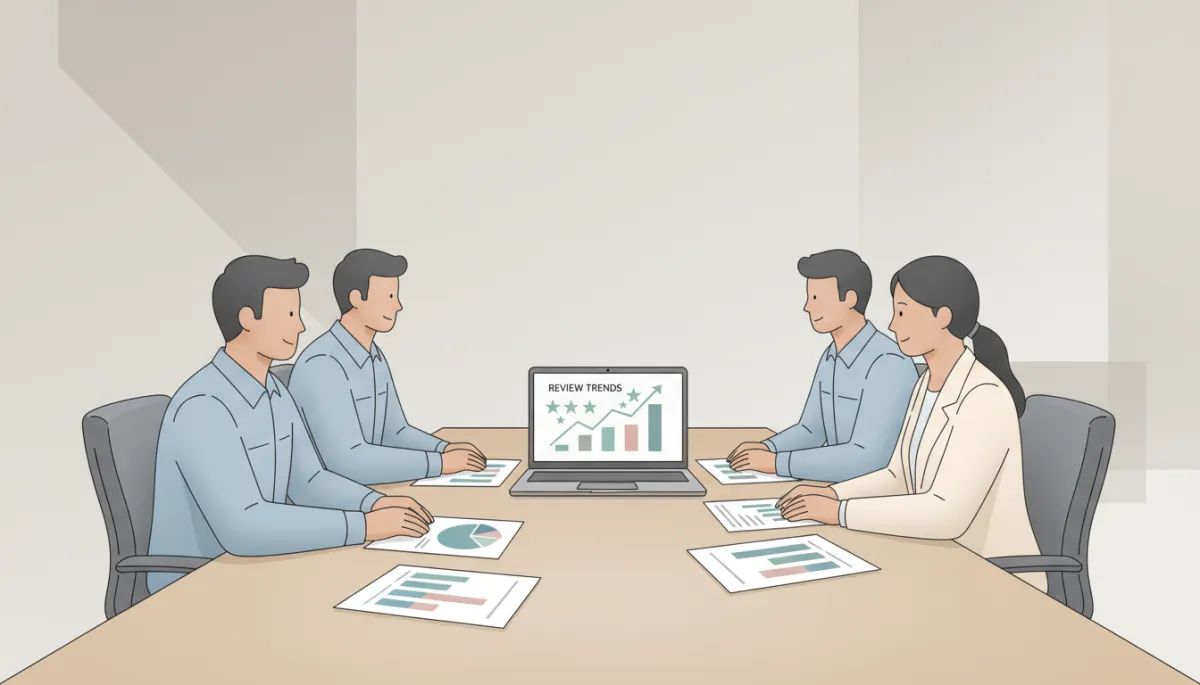
A simple audit of review processes can prevent costly drops in local visibility.
A Clean, Compliant Review System for Local Service Owners
Here is the kind of framework I’d recommend a local service owner‑operator put in place to keep reviews clean and leads steady under the new rules.
1. Ask Every Customer, in the Same Neutral Way
Ditch the “filter first, then send to Google” logic. Build a simple, neutral script that goes to every completed job:
“Thanks for choosing [Your Company Name]. Your feedback helps other customers. If you’re willing, you can share your experience here: [link].”
No mention of “5 stars,” no hint that only happy customers should click. Just a straightforward request on the customer’s own device after the visit—usually via text or email.
2. Remove All Incentives and Staff Quotas
If you’re running “review bonus” contests, tying team bonuses to review counts, or offering discounts for reviews, stop immediately. Replace those programs with rewards for service quality metrics—on‑time arrival, first‑time fix rate, and customer satisfaction scores collected privately, not on Google.
3. Turn Off Gating in Any Review Software You Use
Many CRMs and “reputation tools” still offer thumbs‑up / thumbs‑down flows that only send happy customers to Google. In 2026, that’s a liability. Work with your vendor—or your agency—to:
Disable any gating logic or conditional links.
Ensure all customers see the same review request, regardless of sentiment.
4. Monitor Alerts and Review Activity Weekly
Google now surfaces status messages and warnings in your Business Profile dashboard when they spot suspicious activity or major profile edits. Make sure your Business Profile email is monitored and that someone on your team (or your agency) checks:
Sudden spikes or drops in review volume.
Any public warning banners on your profile.
Reviews that clearly violate Google’s policies (competitors, fake customers, spam), so you can flag them for removal through the proper channels.

Owner of a local plumbing and electrical company reviewing Google Business Profile insights.
The Payoff: Steady, Defensible Leads from Clean Reviews
The goal isn’t just to “avoid penalties.” It’s to build a review profile that Google trusts and keeps showing at the top when people search for “emergency repair near me” in your category. That means:
A steady trickle of genuine reviews every week, not suspicious bursts.
Honest feedback that helps you improve operations and customer experience.
A star rating that holds up even when Google’s filters get stricter again.
Local services are a trust business. When your Google reviews are clean, compliant, and consistent, your phones keep ringing—even as Google tightens the screws on everyone else. If you’re unsure whether your current review tactics are safe under the 2026 rules, now is the time to audit them, adjust, and get ahead of the next enforcement wave.
Frequently Asked Questions About Google’s 2026 Review Crackdown
Below are quick answers to common questions local service owners ask about the new review rules and how they affect day‑to‑day operations.
Can I still ask happy customers for reviews?
Yes—but you must ask all customers in the same neutral way, not just the ones you think are happy. Avoid language that suggests they should only leave a review if everything went perfectly, and don’t steer unhappy customers away from Google.
Is it okay to respond to negative reviews and ask customers to update them?
You should absolutely respond to negative reviews and try to make things right. What’s not allowed is offering incentives—like discounts, freebies, or gift cards—in exchange for updating or removing a review. Focus on solving the problem; if the customer chooses to update their review on their own, that’s fine.
Can my field staff ask customers for reviews on the job site?
They can mention that feedback is appreciated, but avoid on‑site review stations or asking customers to leave a review while the staff member is still there on a shared device. It’s safer to trigger an automated text or email after the job so customers can respond on their own time and device.
What should I do if I suspect fake or competitor reviews?
Use the controls in your Business Profile to flag reviews that clearly violate Google’s policies—such as those from non‑customers, competitors, or obvious spam. Provide as much context as you can, but avoid starting public arguments in the review replies.
Do these rules apply to other platforms like Yelp or Facebook?
Each platform has its own policies, but the general direction is the same: no incentives, no gating, no manipulation. If you build a clean, compliant review process for Google, you’ll usually be in good shape on other major review sites as well—though some platforms, like Yelp, are even more restrictive about asking for reviews in the first place.


