7 Ways HVAC Companies Boost Google Visibility
HVAC Marketing, Local SEO, Digital PR, Google Visibility
7 Ways HVAC Companies Get Found on Google (That Have Nothing to Do With Paid Ads)
As a senior software engineer who lives inside analytics dashboards and search data all day, I see the same pattern with local HVAC companies: they either pour money into Google Ads, or they wait and hope their website magically climbs the rankings. Both approaches miss a powerful third channel, digital PR, that quietly drives calls, rankings, and authority without relying on constant ad spend.
Why Digital PR Matters More Than Ever for HVAC Companies
From a technical perspective, Google has shifted from just crawling your website to understanding your entire online footprint. It tracks where your business is mentioned, how it is described, and how strongly it is associated with specific topics, like emergency furnace repair or AC maintenance in your city. In engineering terms, think of your brand as an entity and every mention as a new data point that strengthens that entity in Google’s graph.
The beauty of digital PR is that, unlike ads, it compounds. Once a news article, blog post, or community feature is published, it can keep sending you authority and leads for years. Below are seven practical, field-tested ways HVAC companies can get found on Google without touching the “Enable Ads” toggle, plus a few simple scripts and automation examples you can actually implement.
1. PR Does Not Just Build Your Brand, It Brings Emergency Calls
Traditional marketers treat PR as fluffy “brand awareness.” In reality, when you are quoted in a local article about a cold snap or rising energy bills, that mention behaves like a delayed trigger. Someone reads it on their phone, your name is stored in their mental cache, and when their furnace fails two days later, they do not Google “HVAC company.” They Google your brand name.
Direct traffic spikes after media mentions (people typing your URL directly).
Branded searches increase (people searching your company name, not “HVAC near me”).
Calls start with “I saw you in that article about…”
💡 Best Practice: Treat branded search volume as a core KPI for your PR efforts. If it is not moving after coverage, your stories are not reaching the right audience.
How to Track Branded Search Spikes (Without Being a Data Scientist)
In Google Search Console, you can pull queries that contain your brand name and correlate them with dates of media coverage. If you are comfortable with a bit of scripting, here is a simple Python example using the Search Console API to log branded impressions over time for an HVAC company called “Johnson Heating & Cooling”:
from datetime import date, timedelta

from googleapiclient.discovery import build
from google.oauth2 import service_account

SCOPES = ["https://www.googleapis.com/auth/webmasters.readonly"]
KEY_FILE = "service-account.json"
SITE_URL = "https://www.johnsonheatingcooling.com"

def get_search_console_service():
    creds = service_account.Credentials.from_service_account_file(
        KEY_FILE,
        scopes=SCOPES,
    )
    return build("searchconsole", "v1", credentials=creds)

def fetch_branded_impressions(service, brand, days=30):
    end_date = date.today()
    start_date = end_date - timedelta(days=days)

    request = {
        "startDate": start_date.isoformat(),
        "endDate": end_date.isoformat(),
        "dimensions": ["date", "query"],
        "dimensionFilterGroups": [
            {
                "filters": [
                    {
                        "dimension": "query",
                        "operator": "CONTAINS",
                        "expression": brand.lower(),
                    }
                ]
            }
        ],
        "rowLimit": 25000,
    }

    response = (
        service.searchanalytics()
        .query(siteUrl=SITE_URL, body=request)
        .execute()
    )

    daily_totals = {}
    for row in response.get("rows", []):
        d = row["keys"][0]
        impressions = row.get("impressions", 0)
        daily_totals[d] = daily_totals.get(d, 0) + impressions

    return daily_totals

if __name__ == "__main__":
    service = get_search_console_service()
    data = fetch_branded_impressions(service, brand="johnson heating")
    for d, impressions in sorted(data.items()):
        print(f"{d}: {impressions} branded impressions")
You do not have to run this yourself, but this is exactly the kind of reporting a technical partner or agency should be doing to prove PR is driving real search demand.
2. Being Everywhere Beats Being Perfect Once
In psychology, the “mere exposure effect” says people trust what they see repeatedly. In engineering, we would call this increasing the signal to noise ratio of your brand. Your goal is not one viral Wall Street Journal mention. It is consistent visibility across all the places your local customers actually read and hang out:
Local news sites and TV station websites.
Neighborhood Facebook groups and Nextdoor threads.
Community newsletters and HOA bulletins (many have online archives).
Real estate and property management blogs in your city.
Regional energy efficiency and home improvement publications.
Best Practice: Think in terms of “touches per homeowner per quarter.” Seeing your brand three times in 60 days beats one big splash followed by silence.
Systematize Your “Be Everywhere” Presence
Treat outreach like a recurring cron job, not a one off campaign. For example, you can maintain a simple CSV of local outlets and rotate through them every month. Here is a tiny Python snippet that cycles through targets so you are not always pitching the same reporter:
import csv
from itertools import cycle

def load_contacts(path="media_contacts.csv"):
    with open(path, newline="") as f:
        reader = csv.DictReader(f)
        return list(reader)

def rotating_contacts(contacts):
    return cycle(contacts)

if __name__ == "__main__":
    contacts = load_contacts()
    contact_cycle = rotating_contacts(contacts)

    # Example: pick 3 different people to pitch this week
    for _ in range(3):
        c = next(contact_cycle)
        print(f"Pitching {c['name']} at {c['outlet']} <{c['email']}>")
Even if you never write code, the mindset is the same: small, consistent touches beat rare, massive campaigns.
3. Do Not Bet Your Whole Marketing Budget on One Campaign
In software, we avoid single points of failure. Yet many HVAC companies will drop $5,000 on one flashy PR stunt and hope it “goes viral.” That is the marketing equivalent of deploying your entire production system on one fragile server with no backups.
A better model is diversification. Run multiple, smaller initiatives in parallel so no single failure sinks your results. Here are practical, low risk plays:
Set Google Alerts for weather and energy keywords in your city and pitch yourself as an expert when relevant stories break.
Publish a quarterly “HVAC trends report” with local data: most common AC failures, average repair costs, time to response during heat waves, and more.
Build relationships with five to ten journalists who cover weather, housing, or consumer issues and send them useful notes a few times a year.
Partner with nonprofits on energy assistance or weatherization programs and co promote stories about the impact.
Best Practice: Allocate a fixed monthly “PR sprint” budget (time and money). Ship several small bets every month instead of saving for one big moonshot.
Automate Weather Triggered Outreach Ideas
One simple engineering style automation: poll a weather API and alert your team when a heat wave or deep freeze is coming so you can pitch timely stories. Pseudo code:
import requests

API_KEY = "YOUR_WEATHER_API_KEY"
CITY = "Tulsa,US"

def get_forecast():
    url = (
        "https://api.openweathermap.org/data/2.5/forecast"
        f"?q={CITY}&appid={API_KEY}&units=imperial"
    )
    resp = requests.get(url, timeout=10)
    resp.raise_for_status()
    return resp.json()

def extreme_weather_in_next_days(data, hot_threshold=95, cold_threshold=20):
    hot = False
    cold = False
    for item in data["list"]:
        temp = item["main"]["temp"]
        if temp >= hot_threshold:
            hot = True
        if temp <= cold_threshold:
            cold = True
    return hot, cold

if __name__ == "__main__":
    forecast = get_forecast()
    hot, cold = extreme_weather_in_next_days(forecast)

    if hot:
        print("Pitch local media: heat wave prep tips and AC failure data.")
    if cold:
        print("Pitch local media: furnace checks before temperatures plunge.")
You can run something like this weekly and let it drive your PR calendar instead of guessing when to reach out.
4. Remember: Journalists Want a Story, Not an Ad
Most HVAC pitches fail because they read like sales emails: “We would love for you to feature our new financing options.” That is not news. It is an ad request. Journalists care about their readers and their editors, not your booking calendar. Your job is to provide useful, timely, specific information that happens to include you as the expert source.
Extreme weather commentary: “What should homeowners do during this week’s heat wave?”
Data stories: “HVAC emergency calls jumped 200% during last month’s freeze.”
Consumer advice: “Five signs your furnace is about to fail before winter.”
Best Practice: Write your pitch so that it could almost be copied straight into a news segment or article. Make the journalist’s job easier than ignoring you.
A Simple, Reusable Pitch Template You Can Personalize
Here is a short email template that respects the journalist’s needs and positions you as a helpful expert:
Subject: Local HVAC data for upcoming cold snap story

Hi {{first_name}},

I saw your recent coverage about the forecasted cold snap next week.

We run an HVAC company here in {{city}}, and during the last similar cold spell
(January 2024) our emergency furnace calls spiked by 180% in three days.
Most of those failures were preventable with simple checks.

If you're working on a story, I'm happy to share:
- Local data on call volume and most common failures
- 3 quick checks homeowners can do before temps drop
- Photos of our techs on calls during last year's freeze

If that's useful, I can send details today or jump on a quick call.

Best,
{{your_name}}
Owner, {{company_name}}
{{phone}}
Notice the focus: it is about their story and their readers, with your business included as a credible source, not the other way around.
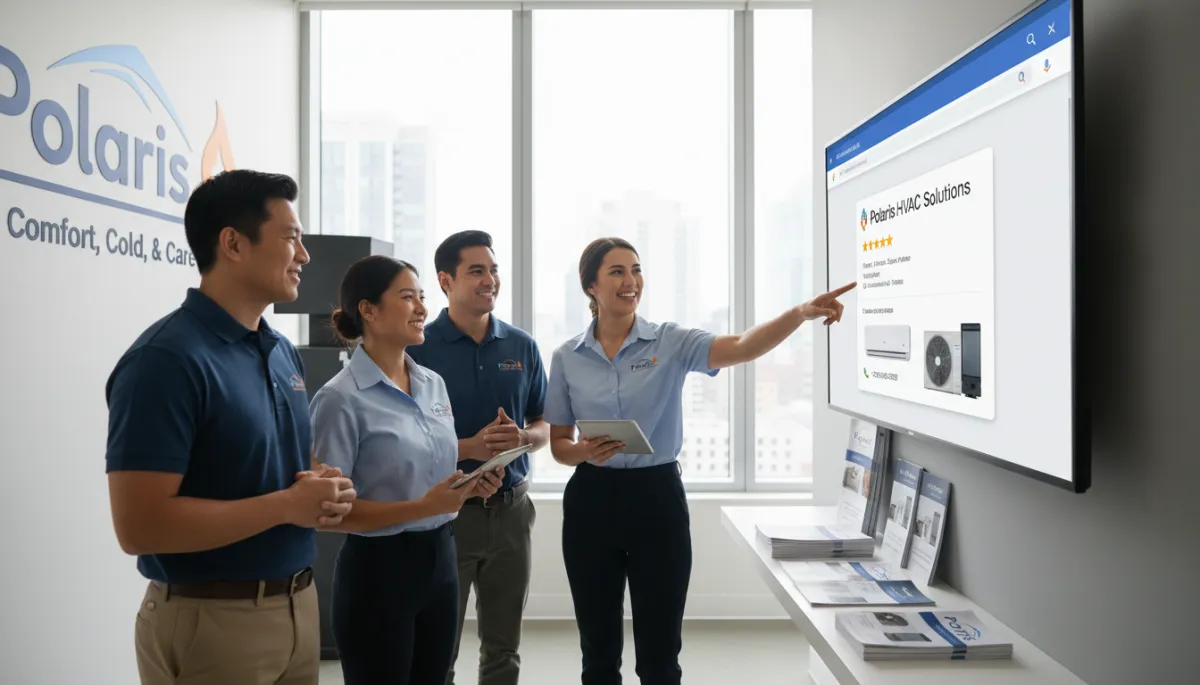
Local media interviews turn everyday service work into long lasting authority.
5. The Links That Actually Matter Are on Your Service Pages
From a technical SEO standpoint, not all backlinks are equal. Links to generic blog posts help a bit, but the real leverage comes from links pointing directly to your revenue driving service pages:
AC repair in [city] page.
Furnace installation in [city] page.
Emergency HVAC service page.
Energy efficient HVAC upgrades page.
These are hard to earn links to, unless you are doing digital PR. When you contribute to a story about rising energy costs, it is natural for the article to link to your “energy efficient upgrades” page. When you are quoted in a piece about preparing for summer, a link to your AC maintenance service page makes perfect sense.
Best Practice: For every PR opportunity, decide in advance which specific service URL you want to strengthen and craft your angle around that topic.
Map PR Topics to Service URLs Like a Routing Table
Think like an engineer designing a router. Each “topic” should route to a specific “destination” URL. A tiny JSON map can keep your team aligned:
{
  "energy_efficiency": "https://examplehvac.com/services/energy-efficient-upgrades",
  "ac_maintenance": "https://examplehvac.com/services/ac-maintenance",
  "furnace_repair": "https://examplehvac.com/services/furnace-repair",
  "emergency_service": "https://examplehvac.com/services/emergency-hvac"
}
When you pitch, reference the topic key (“energy_efficiency,” “ac_maintenance,” and so on) so whoever sends the URL knows exactly which page to provide. Over time, those deep links tell Google that you are the go to provider for those specific services in your city.
6. Google Is Learning What You Are Known For (Entity Lifting)
Under the hood, Google is less about “counting links” and more about building a knowledge graph of entities and relationships. Your company is one of those entities. When your business is repeatedly mentioned in connection with specific topics, emergency furnace repair, energy efficient AC, seasonal maintenance, Google updates its internal model of what you are and who you serve.
Ten articles mentioning you in the context of emergency furnace repair.
Seven mentions in stories about energy efficiency rebates and upgrades.
Five features about preventive HVAC maintenance in your metro area.
The result? You start ranking for phrases like “best HVAC company [city]” and “reliable furnace repair near me” even if those exact phrases are barely present on your site. Google has inferred your relevance based on how others talk about you.
Best Practice: Pick two or three core topics you want to own (for example, emergency repair, energy efficiency, maintenance plans) and make sure every PR mention reinforces those pillars.
Keep Your Messaging Consistent Across the Web
From a developer’s perspective, this is about consistent naming and tagging. Do not describe yourself as “full service HVAC, solar, smart home, and plumbing” in one place and “emergency heating specialist” in another. That is like changing variable types halfway through a function, confusing and error prone.
Use the same short description in your bios: “Emergency and energy efficient HVAC services in [city].”
Emphasize the same two or three topics when you talk to journalists, podcasters, bloggers, and partners.
Make sure your Google Business Profile categories and website copy echo those same strengths.
7. It Is Not Just About Big Publications, It Is About Relevant Ones
A mention in the New York Times looks impressive on a wall, but for a Tulsa based HVAC company, it may not move your local rankings much. Google (and homeowners) care about context and proximity. A quote in your city’s main newspaper or a regional home improvement blog can be far more valuable than a generic national mention.
Local news sites within your service radius.
Neighborhood news blogs and community magazines with online archives.
City specific home improvement and real estate blogs.
Chamber of commerce, contractor directories, and trade associations.
Best Practice: Prioritize outlets your actual customers read. If your average homeowner has never heard of the site, its SEO value is probably limited too.
Simple Scoring System for Outreach Targets
You can even score potential publications with a lightweight system, no machine learning required. For each outlet, rate:
Local relevance (0–3): Is it in your city or region?
Topical relevance (0–3): Does it cover home, energy, or weather?
Audience fit (0–3): Do homeowners or property managers actually read it?
Focus your outreach on sites that score seven to nine. Those are the ones that will send both the right human traffic and the right signals to Google.
Where Digital PR Fits in Your HVAC Marketing Stack
Think of your marketing like a software system with multiple components working together:
Google Ads: On demand traffic. Great for immediate leads, but you pay per click forever.
Website and SEO: Your core infrastructure. You need solid pages, fast load times, and clear service descriptions.
Google Business Profile and Reviews: Local trust signals and map pack visibility.
Digital PR: The authority layer that makes all of the above work better and cheaper over time.
PR generated mentions and links raise your domain’s perceived authority, which can lower your cost per click in ads, improve your organic rankings, and increase click through rates when people see your name in search results because they already recognize it.
A Four Week Starter Plan (No $5,000 Per Month PR Agency Required)
Week 1: Set Up Monitoring and Listening
Create Google Alerts for “[your city] weather,” “[your city] power outages,” “[your city] energy costs,” and “HVAC [your city].”
Follow local journalists on social platforms who cover weather, housing, and consumer topics.
Join local Facebook and Nextdoor groups where homeowners ask for contractor recommendations.
Week 2: Build Your Media List
Identify ten local journalists who might need HVAC expertise and collect their emails in a simple spreadsheet or CRM.
Find five regional home improvement or real estate bloggers who accept expert contributions or interviews.
List community newsletters and HOA bulletins that publish online and accept tips or short articles.
Week 3: Create Your Pitch Assets
Draft three sets of expert tips: energy savings, seasonal maintenance, and emergency prep for extreme weather.
Pull simple stats from your CRM: most common failures by month, average repair costs, average response time during peak weeks.
Take professional photos of your team, trucks, and real service calls (with customer permission) so journalists have visuals to use.
Week 4: Send Your First Pitch
Watch for a relevant news hook: upcoming heat wave, sudden cold snap, energy rate changes, or a local story about high utility bills.
Email one journalist with a short, three sentence offer of help, using the template above and plugging in your local data and tips.
Log the pitch, outcome, and any responses so you can iterate next time, just like you would debug and refine a piece of code.
The Bottom Line for HVAC Companies
Digital PR is not about becoming famous. It is about making sure that when someone in your city thinks “HVAC problem,” your name is the one their brain and Google both surface first. Every mention, every quote, and every contextual link is like another line in the log file telling Google, “This company reliably solves these HVAC problems in this location.”
The HVAC companies dominating local search in 2026 will not just be the ones with the biggest ad budgets. They will be the ones that homeowners already recognize from news stories, community posts, and expert guides, the ones who show up everywhere, not just at the top of the ad block. Digital PR is how you become that company, without spending every extra dollar on clicks.
Got questions about getting local media coverage or want help turning your HVAC data into journalist ready stories? Ask away. And if you have already landed a great local feature, share what worked. Your playbook can help other owners level up too.


