Local SEO 2026: Master Google Business Profile
Local SEO, Google Business Profile, Service Business Marketing
Local SEO in 2026: How Service Businesses Can Win with Google Business Profile and Compliant Reviews
For service businesses, local visibility is no longer optional—it is the primary way customers discover, evaluate, and choose providers. In 2026, success in local SEO hinges on a well-optimized Google Business Profile, a thoughtful review strategy, and strict adherence to emerging Review Policies 2026 and Customer Feedback Compliance standards.
Why Local SEO Matters More Than Ever for Service Businesses
Local SEO ensures your business appears when nearby customers search for solutions such as “emergency plumber near me” or “HAVC repair in downtown Spartanburg.” In 2026, this means optimizing not only your website, but also your entire local presence across Google Search, Maps, and third-party directories. Voice search, mobile-first indexing, and hyperlocal content are now core ranking factors, making it essential that service businesses structure content around natural, conversational questions and location-specific needs.
Best practices continue to emphasize accurate NAP (name, address, phone) data, consistent citations, structured data markup, and localized landing pages. However, the most significant differentiator for many service businesses is the strength and authenticity of their online reviews—and how those reviews are managed in compliance with evolving Review Policies 2026 across platforms and regulators.
Google Business Profile: Your Local SEO Control Center in 2026
Google Business Profile (GBP) has evolved into a powerful hub for local marketing. In 2026, Google’s Gemini-powered tools and Business notebooks allow owners to monitor reviews, performance data, and profile completeness from a single workspace. Profiles that are updated at least monthly—with fresh photos, posts, offers, and accurate hours—are rewarded with stronger visibility, while listings that remain static for more than 30 days often see decreased exposure in Maps and the Local Pack.
Recent updates have also shifted how customers interact with your listing. Traditional public Q&A sections have been replaced by AI-driven “Ask Maps” experiences, where Gemini surfaces answers from your content, reviews, and business information. This makes it critical that your description, services, and posts clearly address common customer questions, policies, and differentiators, written in plain, conversational language that AI can easily interpret and summarize.
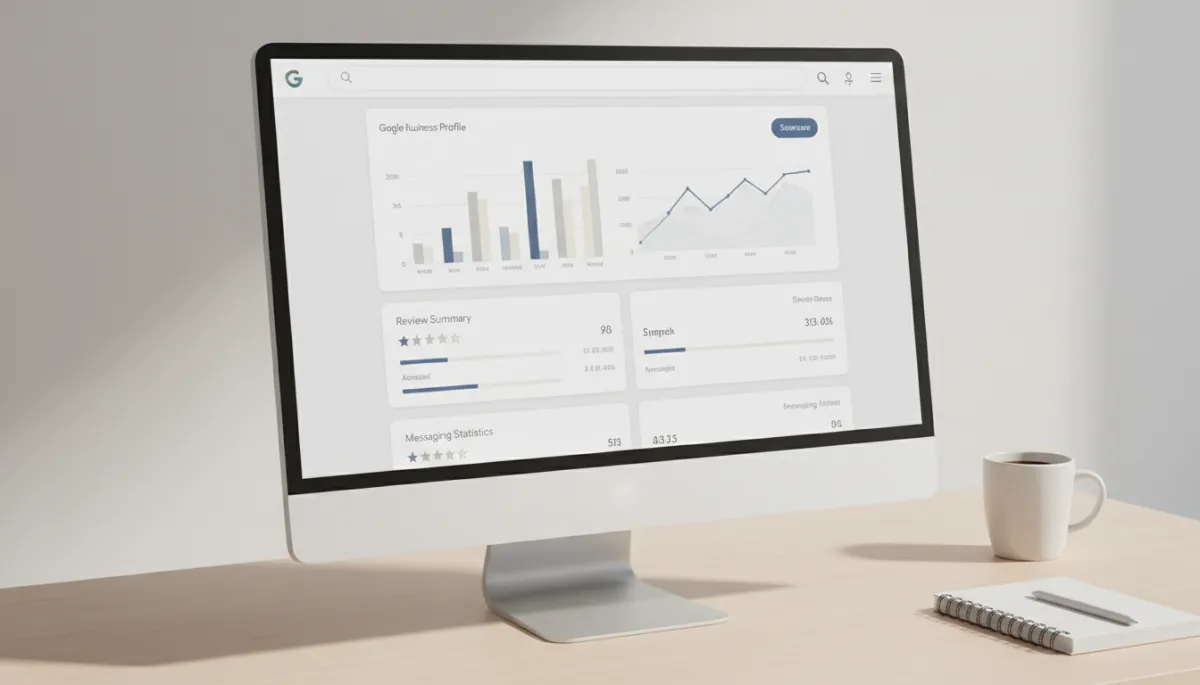
Consistently updated Google Business Profiles tend to gain higher visibility in local search.
Reviews, Sentiment, and Service Business Marketing Strategy
For service businesses, reviews are both marketing assets and trust signals. Google now uses AI to generate review summaries and has increased the algorithmic weight of semantic sentiment. In practice, this means that detailed, story-rich reviews describing the customer’s situation, service quality, and outcome can influence your rankings more than a simple star count alone. Thoughtful responses from the business—especially to critical feedback—are also surfaced and moderated more visibly, reinforcing your brand’s professionalism.
A modern service business marketing plan should integrate review generation into the customer journey: follow-up emails or texts after service, clear calls to action on invoices, and QR codes at physical locations. However, these tactics must be executed within the boundaries of Review Policies 2026 and broader Customer Feedback Compliance expectations to avoid penalties or reputational damage.
Navigating Review Policies 2026 and Incentivized Reviews
As regulators and platforms respond to fake reviews and manipulation, Review Policies 2026 increasingly restrict how businesses can request and reward feedback. Many jurisdictions and platforms now treat deceptive or undisclosed Incentivized Reviews as misleading advertising. Offering discounts, gifts, or contest entries in exchange for “positive” reviews can violate both platform rules and consumer protection laws, potentially leading to review removals, account suspensions, or formal enforcement actions.
To remain compliant, service businesses should adopt incentive-neutral language and transparent processes. If you choose to use incentives, they must be clearly disclosed, and customers must be free to leave any rating or no review at all. Many brands are moving away from Incentivized Reviews entirely, instead focusing on frictionless review requests and exceptional service moments that naturally motivate customers to share their experiences.
📌 Key Takeaway: Design your review strategy so you would be comfortable explaining it to both a regulator and a skeptical customer.
Building a Customer Feedback Compliance Framework
Customer Feedback Compliance is no longer a legal footnote; it is part of your brand promise. A structured framework should cover how you collect, store, respond to, and publicly display feedback across channels. This includes honoring data privacy rules, avoiding discrimination in which customers you invite to review, and never suppressing or selectively hiding negative feedback that meets platform guidelines.
Practical steps include creating a written feedback policy, training front-line teams on compliant review requests, and documenting consent whenever you use testimonials in marketing materials. Regularly audit your Google Business Profile, website, and third-party platforms for outdated incentives, misleading claims, or inconsistent responses. Aligning your internal review practices with external Review Policies 2026 reduces risk and reinforces credibility with both search engines and customers.

A documented feedback policy helps align marketing goals with regulatory expectations.
Turning Compliance into Competitive Advantage
When approached strategically, compliance can enhance, not hinder, service business marketing. Transparent review practices, timely responses, and clear explanations of how you handle feedback can differentiate your brand in crowded local markets. Combined with strong Local SEO fundamentals—mobile-friendly pages, hyperlocal content, structured data, and robust Google Business Profile management—this transparency signals reliability to both algorithms and real people.
In 2026 and beyond, winning local customers will depend on more than clever keywords or flashy ads. The service businesses that thrive will be those that align their Local SEO, Google Business Profile optimization, and review strategy with evolving Review Policies 2026 and rigorous Customer Feedback Compliance. By doing so, you not only protect your brand—you build the kind of trust that turns local searchers into long-term clients.


